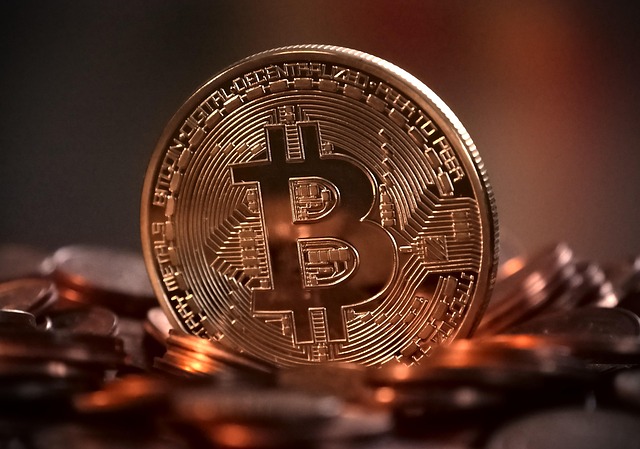

Crypto and the Bigger Economic Picture
No Longer an Isolated Market
Cryptocurrency once operated on the fringes of the financial world, but that’s no longer the case. Today, crypto doesn’t move in a vacuum. The rise and fall of digital assets are increasingly tied to global economic forces that influence every major market.
- Crypto is now part of broader investment portfolios
- Moves in traditional finance often ripple into digital asset prices
- Sentiment is shaped by news far beyond the blockchain
Why Macro Trends Matter
Even if you’re laser-focused on DeFi or NFTs, macroeconomic indicators such as inflation, interest rates, and GDP growth have major implications. Savvy investors recognize that crypto is now subject to the same market pressures as tech stocks, commodities, and real estate.
Key factors to watch:
- Inflation: Rising inflation often drives demand for assets seen as stores of value, but its effects on crypto are complex
- Interest rates: Changes in central bank policies impact borrowing costs, liquidity, and risk appetite
- Global economic stability: Economic uncertainty can either boost or rattle crypto markets, depending on investor sentiment
A New Phase for Crypto
As crypto matures, it’s behaving more like traditional asset classes. That means increased correlation with global markets and less immunity to broad economic shifts.
- Institutional involvement aligns crypto with macroeconomic trends
- Market cycles are increasingly influenced by external events
- Understanding the global picture is key to anticipating crypto moves
By recognizing crypto’s growing sensitivity to macroeconomic factors, investors can make more informed decisions and ride waves with greater confidence.
The Economy’s Impact on Crypto Buying Behavior
Inflation and Shifting Buyer Behavior
High inflation throughout recent years has pushed investors to rethink where and how they put their money. In the crypto world, the result has been a noticeable shift in purchasing patterns:
- Increased interest in stablecoins as a hedge against local currency volatility
- Hesitancy toward altcoins with unclear fundamentals
- A return to more established assets like Bitcoin and Ethereum
Many retail investors, once driven by hype and momentum, now tend to approach the market with more caution. High inflation has made people more protective of their capital, forcing them to weigh risk more critically.
The Fed’s Role: Interest Rates and Risk Appetite
The U.S. Federal Reserve’s interest rate hikes have played a major role in cooling risk asset enthusiasm. As borrowing becomes more expensive and savings accounts offer improved returns, speculative assets—like crypto—face steeper competition.
Key outcomes include:
- Reduced short-term investment in risk-heavy tokens
- Institutional money flowing more cautiously into the digital asset space
- A tighter correlation between crypto and traditional financial markets
The rising cost of capital has pressured both individual and institutional investors to rethink their exposure to volatile assets.
Bitcoin: Store of Value or Risk Asset?
Bitcoin’s role in an investor’s portfolio has become increasingly debated. In some circles, it’s still viewed as “digital gold”—a hedge against inflation and a decentralized alternative to fiat currency. Others, however, point to its high volatility and market correlations as evidence that it’s behaving more like a tech stock than a store of value.
Questions investors are asking:
- Is Bitcoin a safe haven or a speculative play?
- How should it be positioned in a diversified portfolio?
- Does it offer true protection in economically uncertain times?
The answer may vary depending on investor profile, but one thing is clear: Bitcoin’s identity is still evolving as macroeconomic pressures continue to shift.
Macro Trends: What Institutions Are Really Watching
Institutional interest in digital assets doesn’t move in a straight line. Instead, it’s closely tied to larger macroeconomic cycles and investor sentiment. Understanding these dynamics is crucial for anticipating market shifts.
Macro Cycles Drive Institutional Appetite
Institutional players respond to broader economic signals, including interest rates, inflation levels, and geopolitical tensions. These macro trends often dictate how willing large investors are to enter or exit risk-on markets like crypto.
Key macro factors affecting institutional demand:
- Central bank policies and interest rate shifts
- Inflation reports and CPI trends
- Global growth forecasts and recession signals
- Currency strength, especially the US dollar
When macro uncertainty rises, institutions tend to reduce exposure to volatile asset classes. Conversely, periods of economic stability or optimism see more capital flowing into digital assets.
Risk-On vs. Risk-Off Phases
Crypto markets remain highly sensitive to global risk sentiment. Understanding whether the broader environment is risk-on or risk-off helps decode institutional behavior.
Risk-On Phase:
- Favorable outlook for growth
- Lower interest rates
- Appetite for high-reward assets
- Institutions increase crypto exposure
Risk-Off Phase:
- Market volatility and uncertainty
- Capital moves to safe-haven assets (like bonds or gold)
- Institutions pull back from crypto investments
Recognizing the current phase helps creators, investors, and analysts align their strategies with institutional flows.
Policy Clarity is a Market Mover
Unlike analysts or retail investors, institutions cannot simply “ride the volatility”. They require a clear legal and operational environment. That’s why regulatory clarity often overrides even the most bullish headlines.
When clear frameworks emerge, particularly in major markets like the US or EU, institutional confidence grows. On the other hand, ambiguous statements or inconsistent regulations can stall interest, regardless of favorable market data.
Regulatory drivers to watch:
- SEC and CFTC rulings on asset classification
- Stablecoin legislation and licensing
- Exchange and custody compliance standards
Institutions need clarity, not hype. And as frameworks mature, the institutional floodgates open wider.
Geopolitical tension isn’t new, but its ripple effect on the world of digital finance is deepening. War, sanctions, and global instability have left traditional investors shaky, forcing them to reassess where they park their capital. Uncertainty kills appetite. In this environment, reserve currencies like the US dollar aren’t the only fallback—crypto is getting a second look.
Bitcoin and stablecoins are starting to act a lot more like digital safe havens. BTC, for all its volatility, is increasingly viewed as a hedge against inflation, rogue governments, and capital controls. Stablecoins, especially those pegged to the dollar, are another fallback for anyone trying to move money discreetly or store value in collapsing local currencies.
In countries facing sanctions or economic freefall, capital flight isn’t optional—it’s survival. That’s where decentralized finance comes in. Platforms that let users swap, stake, or hold assets without banks are proving their value. People don’t want flaky banks or middlemen when the local economy pulls the rug. And while regulators debate, citizens act.
The message is clear: as global institutions wobble, digital tools are helping people move faster, safer, and more independently. DeFi isn’t fringe anymore. It’s turning into an underground highway for capital in crisis zones.
In countries like Argentina and Turkey, where inflation erodes savings almost as quickly as they’re deposited, traditional banking has lost the public’s trust. Enter crypto—not as a luxury or speculative bet, but as a survival tool. In Buenos Aires and Istanbul, people aren’t talking about NFTs or meme coins. They’re using USDT and USDC like digital dollars, getting paid in them, saving in them, and even paying rent in them.
This shift isn’t theoretical. In Argentina, where annual inflation crosses triple digits, small business owners and freelancers increasingly request payment in stablecoins to avoid the overnight volatility of the peso. In Turkey, double-digit inflation and currency devaluation have led many to convert wages to crypto instantly, trying to preserve value before it vanishes.
Stablecoins have become more than just technical instruments—they’re lifelines. But this raises bigger questions: Is this the future of money, or just a temporary workaround? DeFi offers direct access to capital, bypassing the sluggish or broken systems of local banks. But it’s not perfect. Without regulation, scams thrive. Access still depends on digital literacy and internet infrastructure. So for now, it’s not a clean answer. It’s a patch. Maybe a necessary one.
Decentralized finance might not be the long-term fix. But in places where the old tools have failed, it’s becoming the best bet people have.
When money tightens, altcoins feel it first. The days of blind speculation are cooling off, and the market is becoming more selective. Investors aren’t just looking for ‘what’s next’ — they’re looking for ‘what works.’ In 2024, that means altcoins are under pressure to perform, not just promise.
During bear markets, smart money consolidates. It moves into proven assets, cash-flowing protocols, or simply sidelines to wait. In bull phases, that same capital seeks asymmetric upside, often testing small caps with actual utility. The key is timing and clarity. Retail investors tend to follow where the whales already went.
Innovation still matters — but gimmick-heavy projects without real-world application are getting filtered out faster than ever. Solving real problems, from decentralized identity to cross-border payments, is the new narrative that gets attention and funding.
For an in-depth look at standout blockchain projects in this volatile macro landscape, read Top Blockchain Projects Experts Are Watching in 2024.
Macro signals move markets. For crypto traders, watching the right indicators can mean the difference between catching a trend early or getting caught flat-footed. Interest rates, inflation levels, central bank policy, and employment data are among the heaviest hitters. When the Fed speaks, crypto listens. And when inflation ticks up, Bitcoin often ticks with it—or against it, depending on the broader sentiment.
In 2024, agility isn’t optional. Global markets are shifting faster and more frequently. Traditional correlations—like Bitcoin as an inflation hedge or altcoins following tech stock trajectories—aren’t always reliable anymore. You have to read the terrain in real-time and adapt without flinching.
One final thought: macro isn’t background noise. It’s the backdrop that sets the tone for every trade, every rally, every crash. Successful traders aren’t just watching charts—they’re reading the world.
 There is a specific skill involved in explaining something clearly — one that is completely separate from actually knowing the subject. Roberthory Cubbage has both. They has spent years working with nft trends and insights in a hands-on capacity, and an equal amount of time figuring out how to translate that experience into writing that people with different backgrounds can actually absorb and use.
Roberthory tends to approach complex subjects — NFT Trends and Insights, Blockchain Technology Discussions, Crypto News and Updates being good examples — by starting with what the reader already knows, then building outward from there rather than dropping them in the deep end. It sounds like a small thing. In practice it makes a significant difference in whether someone finishes the article or abandons it halfway through. They is also good at knowing when to stop — a surprisingly underrated skill. Some writers bury useful information under so many caveats and qualifications that the point disappears. Roberthory knows where the point is and gets there without too many detours.
The practical effect of all this is that people who read Roberthory's work tend to come away actually capable of doing something with it. Not just vaguely informed — actually capable. For a writer working in nft trends and insights, that is probably the best possible outcome, and it's the standard Roberthory holds they's own work to.
There is a specific skill involved in explaining something clearly — one that is completely separate from actually knowing the subject. Roberthory Cubbage has both. They has spent years working with nft trends and insights in a hands-on capacity, and an equal amount of time figuring out how to translate that experience into writing that people with different backgrounds can actually absorb and use.
Roberthory tends to approach complex subjects — NFT Trends and Insights, Blockchain Technology Discussions, Crypto News and Updates being good examples — by starting with what the reader already knows, then building outward from there rather than dropping them in the deep end. It sounds like a small thing. In practice it makes a significant difference in whether someone finishes the article or abandons it halfway through. They is also good at knowing when to stop — a surprisingly underrated skill. Some writers bury useful information under so many caveats and qualifications that the point disappears. Roberthory knows where the point is and gets there without too many detours.
The practical effect of all this is that people who read Roberthory's work tend to come away actually capable of doing something with it. Not just vaguely informed — actually capable. For a writer working in nft trends and insights, that is probably the best possible outcome, and it's the standard Roberthory holds they's own work to.